Pushkin: Mozart and Salieri
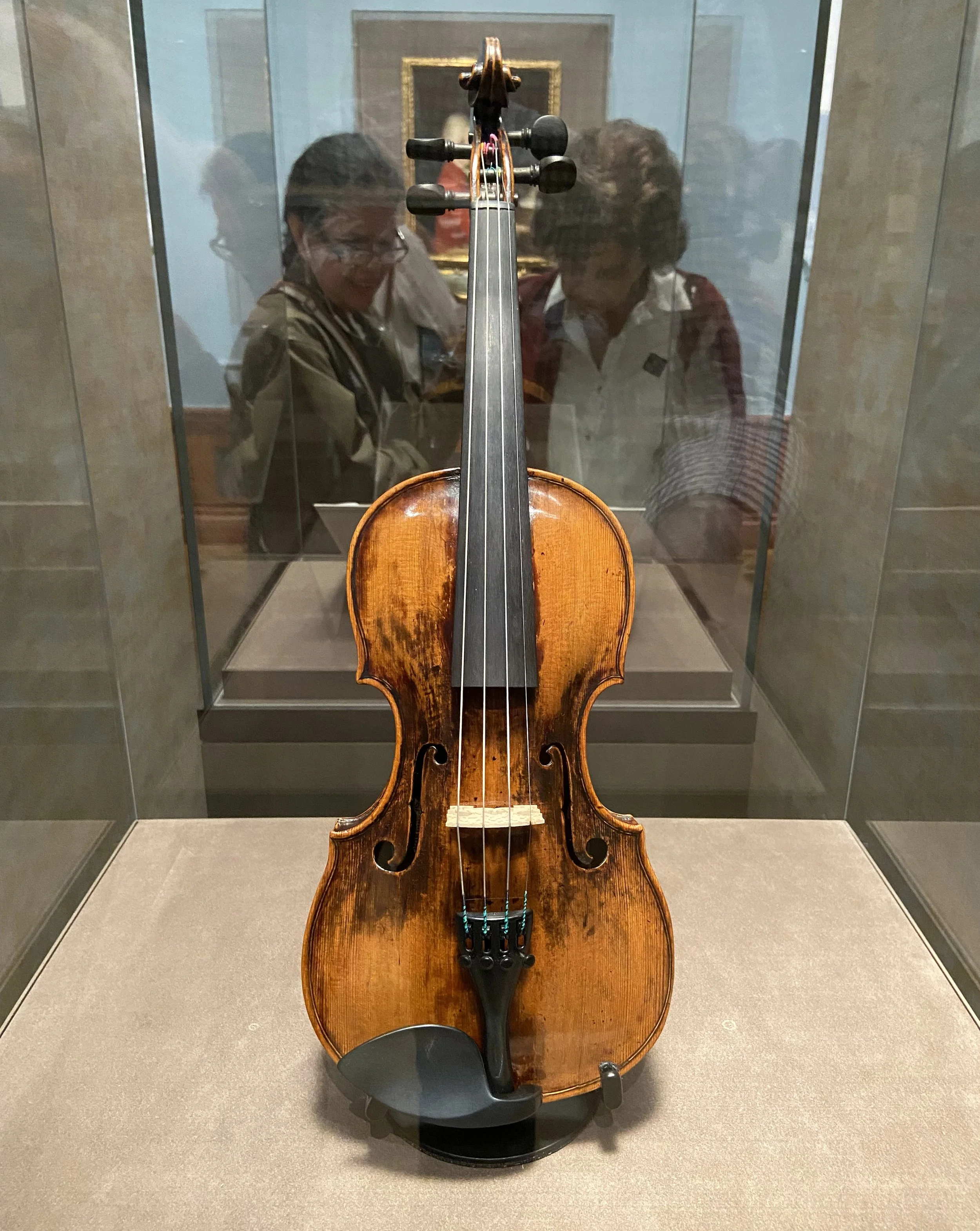
Mozart’s childhood violin, given to him around the age of 6 or 7. From a recent exhibit at the Morgan Library in New York.
Here’s another translation from my upcoming release, Reading Russian Poetry; as with most of the translations in my readers, it sticks very closely to the original; while I do try to make it sound as good as possible, this certainly does not aspire to be a translation of any poetic value. It’s simply a learning tool to make it easier to decode the original. The Reader will include all vocab notes, as usual.
This is one of Pushkin’s four Little Tragedies (Маленькие трагедии), written during his famous “Boldino Autumn” in 1830. I do have another of these posted on my web site — A Feast in Time of Plague — which I translated during Covid (quite appropriately, since Pushkin’s incredibly productive “Boldino Autumn” was the result of his being confined to his estate during an epidemic.
Моцарт и Сальери
СЦЕНА I Комната.
Сальери
Все говорят: нет правды на земле.
Но правды нет — и выше. Для меня
Так это ясно, как простая гамма.
Родился я с любовию к искусству;
Ребёнком будучи, когда высоко
Звучал орган в старинной церкви нашей,
Я слушал и заслушивался — слёзы
Невольные и сладкие текли.
Отверг я рано праздные забавы;
Науки, чуждые музыке, были
Постылы мне; упрямо и надменно
От них отрёкся я и предался
Одной музыке. Труден первый шаг
И скучен первый путь. Преодолел
Я ранние невзгоды. Ремесло
Поставил я подножием искусству;
Я сделался ремесленник: перстам
Придал послушную, сухую беглость
И верность уху. Звуки умертвив,
Музыку я разъял, как труп. Поверил
Я алгеброй гармонию. Тогда
Уже дерзнул, в науке искушенный,
Предаться неге творческой мечты.
Я стал творить; но в тишине, но в тайне,
Не смея помышлять ещё о славе.
Нередко, просидев в безмолвной келье
Два, три дня, позабыв и сон и пищу,
Вкусив восторг и слёзы вдохновенья,
Я жёг мой труд и холодно смотрел,
Как мысль моя и звуки, мной рождённы,
Пылая, с лёгким дымом исчезали.
Что говорю? Когда великий Глюк
Явился и открыл нам новы тайны
(Глубокие, пленительные тайны),
Не бросил ли я всё, что прежде знал,
Что так любил, чему так жарко верил,
И не пошёл ли бодро вслед за ним
Безропотно, как тот, кто заблуждался
И встречным послан в сторону иную?
Усильным, напряжённым постоянством
Я наконец в искусстве безграничном
Достигнул степени высокой. Слава
Мне улыбнулась; я в сердцах людей
Нашёл созвучия своим созданьям.
Я счастлив был: я наслаждался мирно
Своим трудом, успехом, славой; также
Трудами и успехами друзей,
Товарищей моих в искусстве дивном.
Нет! никогда я зависти не знал,
О, никогда! — нижe, когда Пиччини
Пленить умел слух диких парижан,
Ниже, когда услышал в первый раз
Я Ифигении начальны звуки.
Кто скажет, чтоб Сальери гордый был
Когда-нибудь завистником презренным,
Змеёй, людьми растоптанною, вживе
Песок и пыль грызущею бессильно?
Никто!.. А ныне — сам скажу — я ныне
Завистник. Я завидую; глубоко,
Мучительно завидую. — О небо!
Где ж правота, когда священный дар,
Когда бессмертный гений — не в награду
Любви горящей, самоотверженья,
Трудов, усердия, молений послан —
А озаряет голову безумца,
Гуляки праздного?.. О Моцарт, Моцарт!
Входит Моцарт.
Моцарт
Ага! увидел ты! а мне хотелось
Тебя нежданной шуткой угостить.
Сальери
Ты здесь! — Давно ль?
Моцарт
Сейчас. Я шёл к тебе,
Нёс кое-что тебе я показать;
Но, проходя перед трактиром, вдруг
Услышал скрыпку… Нет, мой друг, Сальери!
Смешнее отроду ты ничего
Не слыхивал… Слепой скрыпач в трактире
Разыгрывал voi che sapete. Чудо!
Не вытерпел, привёл я скрыпача,
Чтоб угостить тебя его искусством.
Войди!
Входит слепой старик со скрыпкой.
Из Моцарта нам что-нибудь!
Старик играет арию из Дон-Жуана; Моцарт хохочет.
Сальери
И ты смеяться можешь?
Моцарт
Ах, Сальери!
Ужель и сам ты не смеёшься?
Сальери
Нет.
Мне не смешно, когда маляр негодный
Мне пачкает Мадонну Рафаэля,
Мне не смешно, когда фигляр презренный
Пародией бесчестит Алигьери.
Пошёл, старик.
Моцарт
Постой же: вот тебе,
Пей за моё здоровье.
Старик уходит.
Ты, Сальери,
Не в духе нынче. Я приду к тебе
В другое время.
Сальери
Что ты мне принёс?
Моцарт
Нет — так; безделицу. Намедни ночью
Бессонница моя меня томила,
И в голову пришли мне две, три мысли.
Сегодня их я набросал. Хотелось
Твоё мне слышать мненье; но теперь
Тебе не до меня.
Сальери
Ах, Моцарт, Моцарт!
Когда же мне не до тебя? Садись;
Я слушаю.
Моцарт
(за фортепиано)
Представь себе... кого бы?
Ну, хоть меня — немного помоложе;
Влюблённого — не слишком, а слегка —
С красоткой, или с другом — хоть с тобой,
Я весел… Вдруг: виденье гробовое,
Незапный мрак иль что-нибудь такое…
Ну, слушай же.
(Играет.)
Сальери
Ты с этим шёл ко мне
И мог остановиться у трактира
И слушать скрыпача слепого! — Боже!
Ты, Моцарт, недостоин сам себя.
Моцарт
Что ж, хорошо?
Сальери
Какая глубина!
Какая смелость и какая стройность!
Ты, Моцарт, бог, и сам того не знаешь;
Я знаю, я.
Моцарт
Ба! право? может быть...
Но божество моё проголодалось.
Сальери
Послушай: отобедаем мы вместе
В трактире Золотого Льва.
Моцарт
Пожалуй;
Я рад. Но дай схожу домой сказать
Жене, чтобы меня она к обеду
Не дожидалась.
(Уходит.)
Сальери
Жду тебя; смотри ж.
Нет! не могу противиться я доле
Судьбе моей: я избран, чтоб его
Остановить — не то мы все погибли,
Мы все, жрецы, служители музыки,
Не я один с моей глухою славой….
Что пользы, если Моцарт будет жив
И новой высоты ещё достигнет?
Подымет ли он тем искусство? Нет;
Оно падёт опять, как он исчезнет:
Наследника нам не оставит он.
Что пользы в нём? Как некий херувим,
Он несколько занёс нам песен райских,
Чтоб, возмутив бескрылое желанье
В нас, чадах праха, после улететь!
Так улетай же! чем скорей, тем лучше.
Вот яд, последний дар моей Изоры.
Осьмнадцать лет ношу его с собою —
И часто жизнь казалась мне с тех пор
Несносной раной, и сидел я часто
С врагом беспечным за одной трапезой,
И никогда на шёпот искушенья
Не преклонился я, хоть я не трус,
Хотя обиду чувствую глубоко,
Хоть мало жизнь люблю. Всё медлил я.
Как жажда смерти мучила меня,
Что умирать? я мнил: быть может, жизнь
Мне принесёт незапные дары;
Быть может, посетит меня восторг
И творческая ночь и вдохновенье;
Быть может, новый Гайден сотворит
Великое — и наслажуся им…
Как пировал я с гостем ненавистным,
Быть может, мнил я, злейшего врага
Найду; быть может, злейшая обида
В меня с надменной грянет высоты —
Тогда не пропадёшь ты, дар Изоры.
И я был прав! и наконец нашёл
Я моего врага, и новый Гайден
Меня восторгом дивно упоил!
Теперь — пора! заветный дар любви,
Переходи сегодня в чашу дружбы.
СЦЕНА II
Особая комната в трактире; фортепиано.
Моцарт и Сальери за столом.
Сальери
Что ты сегодня пасмурен?
Моцарт
Я? Нет!
Сальери
Ты верно, Моцарт, чем-нибудь расстроен?
Обед хороший, славное вино,
А ты молчишь и хмуришься.
Моцарт
Признаться,
Мой Requiem меня тревожит.
Сальери
А!
Ты сочиняешь Requiem? Давно ли?
Моцарт
Давно, недели три. Но странный случай…
Не сказывал тебе я?
Сальери
Нет.
Моцарт
Так слушай.
Недели три тому, пришёл я поздно
Домой. Сказали мне, что заходил
За мною кто-то. Отчего — не знаю,
Всю ночь я думал: кто бы это был?
И что ему во мне? Назавтра тот же
Зашёл и не застал опять меня.
На третий день играл я на полу
С моим мальчишкой. Кликнули меня;
Я вышел. Человек, одетый в чёрном,
Учтиво поклонившись, заказал
Мне Requiem и скрылся. Сел я тотчас
И стал писать — и с той поры за мною
Не приходил мой чёрный человек;
А я и рад: мне было б жаль расстаться
С моей работой, хоть совсем готов
Уж Requiem. Но между тем я…
Сальери
Что?
Моцарт
Мне совестно признаться в этом…
Сальери
В чём же?
Моцарт
Мне день и ночь покоя не даёт
Мой чёрный человек. За мною всюду
Как тень он гонится. Вот и теперь
Мне кажется, он с нами сам-третей
Сидит.
Сальери
И, полно! что за страх ребячий?
Рассей пустую думу. Бомарше
Говаривал мне: «Слушай, брат Сальери,
Как мысли чёрные к тебе придут,
Откупори шампанского бутылку
Иль перечти „Женитьбу Фигаро“».
Моцарт
Да! Бомарше ведь был тебе приятель;
Ты для него «Тарара» сочинил,
Вещь славную. Там есть один мотив…
Я всё твержу его, когда я счастлив…
Ла ла ла ла… Ах, правда ли, Сальери,
Что Бомарше кого-то отравил?
Сальери
Не думаю: он слишком был смешон
Для ремесла такого.
Моцарт
Он же гений,
Как ты да я. А гений и злодейство —
Две вещи несовместные. Не правда ль?
Сальери
Ты думаешь?
(Бросает яд в стакан Моцарта.)
Ну, пей же.
Моцарт
За твоё
Здоровье, друг, за искренний союз,
Связующий Моцарта и Сальери,
Двух сыновей гармонии.
(Пьёт.)
Сальери
Постой,
Постой, постой!.. Ты выпил… без меня?
Моцарт
(бросает салфетку на стол)
Довольно, сыт я.
(Идёт к фортепиано.)
Слушай же, Сальери,
Мой Requiem.
(Играет.)
Ты плачешь?
Сальери
Эти слёзы
Впервые лью: и больно и приятно,
Как будто тяжкий совершил я долг,
Как будто нож целебный мне отсёк
Страдавший член! Друг Моцарт, эти слёзы…
Не замечай их. Продолжай, спеши
Ещё наполнить звуками мне душу…
Моцарт
Когда бы все так чувствовали силу
Гармонии! Но нет: тогда б не мог
И мир существовать; никто б не стал
Заботиться о нуждах низкой жизни;
Все предались бы вольному искусству.
Нас мало избранных, счастливцев праздных,
Пренебрегающих презренной пользой,
Единого прекрасного жрецов.
Не правда ль? Но я нынче нездоров,
Мне что-то тяжело; пойду засну.
Прощай же!
Сальери
До свиданья.
(Один.)
Ты заснёшь
Надолго, Моцарт! Но ужель он прав,
И я не гений? Гений и злодейство
Две вещи несовместные. Неправда:
А Бонаротти? Или это сказка
Тупой, бессмысленной толпы — и не был
Убийцею создатель Ватикана?
Mozart and Salieri
SCENE I. A room.
Salieri
Everyone says there’s no truth on this earth.
But neither is there any truth on high. For me,
This is as clear as a simple musical scale.
I was born with a love for art;
While yet a child, when sublimely
The organ would sound in that old church of ours,
I’d listen, and listen with an ever deeper concentration — tears,
Involuntary and sweet, would flow.
Early did I reject vain amusements;
Those sciences alien to music were,
For me, abhorrent; stubbornly and proudly
I did abjure them all, and gave myself completely
To music alone. Hard is the initial step,
And dull the journey at its outset. Yet I overcame
Those early miseries. My craft
I designated as the pedestal of art;
I made myself a craftsman: to my fingers
I did impart a pliant, dry agility,
And fealty to the ear. Having put the sounds to death,
I took apart the music like a corpse. I checked
Harmony with algebra. And only then
Did I work up the nerve, once well-versed in the science,
To give myself up to the bliss of my creative dream.
I began to create; but only in quiet, only in secret,
Not daring yet to give a thought to glory.
Quite often, having sat there in my silent cell
For two or three days, and oblivious to sleep or food;
Having tasted the delight and tears of inspiration,
I’d burn my work, and look on coldly
As my thought, and the sounds to which I’d given birth,
While burning, disappeared with a slight wisp of smoke.
What am I saying? When the great Gluck
Appeared and revealed to us new secrets
(Profound, captivating secrets),
Did I not abandon everything I’d known till then,
All I’d so loved, so ardently believed in;
Did I not set off briskly in his wake,
Without a word of protest, like one who, gone astray,
Was told by one met on his way to seek a new direction?
By zealous, strenuous persistence
I, at long last, in boundless art
Attained a lofty rank. Glory
Smiled upon me; and in the hearts of men
I found a consonance with my creations.
I was happy: in peace I found enjoyment
In my toil, success, and glory; and also
In the labors and successes of my friends,
My comrades in this wondrous art.
No! Never did I know jealousy,
O, never! — Not even when Piccini
Proved capabale of captivating the ears of savage Parisians,
Nor when I heard, for the first time,
The opening chords of Iphigenia.
Who’ll say that proud Salieri was,
At any time, a wretched envier,
A serpent trampled on by men, while yet alive
Gnawing sand and dust in impotence?
No one!.. And yet today — I’ll say myself — today I
Am an envier. I envy; deeply,
Agonizingly I envy. — O heaven!
Where is justice, where the sacred gift,
When deathless genius — not in reward
For burning love and self-denial,
For labors, zeal, and prayers is sent —
Illumining instead a madman’s head,
An idle reveler?.. O Mozart, Mozart!
Mozart enters.
Mozart
Aha! You saw me! And I had wished
To treat you to an unexpected prank.
Salieri
You’re here! — How long already?
Mozart
Just now. I was on my way to see you,
And carrying a little something to show you;
When, passing by a tavern, suddenly
I heard a violin... No, my friend Salieri!
In all your days you’ve surely never heard
Anything funnier... A violinist — blind, and in a tavern —
Was playing voi che sapete. What a wonder!
I simply couldn’t help myself; I brought the violinist here,
To treat you with his art.
Come in!
The blind violinist enters with his violin.
Let’s have something by Mozart!
The old man plays an aria from Don Giovanni; Mozart guffaws.
Salieri
You find this cause for laughter?
Mozart
Oh, Salieri!
Are you really not laughing yourself?
Salieri
No.
I do not find it funny when some unworthy painter
Besmears, before my eyes, Rafael’s Madonna;
I do not find it funny when some despicable buffoon
Dishonors Alighieri with a parody.
Begone, old man.
Mozart
No, wait: here, take this.
Drink to my health.
The old man leaves.
You, Salieri,
Are out of sorts today. I’ll come to visit you
Some other time.
Salieri
What have you brought for me?
Mozart
It’s nothing, just a trifle. The other day, at night,
Insomnia was plaguing me,
And an idea or two came to my head.
Today I jotted them down. I felt the urge
To hear your opinion; but now
You don’t seem too concerned with me.
Salieri
Ah, Mozart, Mozart!
When exactly am I not concerned with you? Be seated;
I’m listening.
Mozart
(at the piano)
Now, just imagine... whom exactly?
Why, me at least — a little younger;
In love — not too much, but a bit —
With some young beauty, or with a friend, or even with you;
I’m feeling merry... Then, suddenly: some vision of the grave,
A sudden gloom, or something of the sort...
Well, just have a listen.
(He plays.)
Salieri
You were bringing this to me,
And yet were capable of stopping by a tavern,
And listening to some blind violinist? — God!
You, Mozart, are unworthy of yourself.
Mozart
So then, you find it good?
Salieri
What depth!
What boldness and what elegance!
You, Mozart, are a god, and you yourself don’t know it;
But I do, I do.
Mozart
Come now, really? Perhaps it’s so...
But my divinity is feeling hungry.
Salieri
Listen: let us dine together
At the tavern of the Golden Lion.
Mozart
Very well;
I’m glad to do so. But let me first run home to tell
My wife, lest she sit there expecting me
For dinner.
(He leaves.)
Сальери
I’ll wait for you; but be on guard.
No! No longer am I able to resist
My fate: I was chosen
To stop him — otherwise we all are lost,
We all, we priests, we, music’s servants,
Not I alone with my muted fame...
What use is it, should Mozart live
And yet attain new heights?
Will he thereby elevate art? No;
It will fall again the moment he is gone:
He’ll leave behind no heir for us.
What use is there in him? Like some cherubim,
He brought to us a handful of heavenly songs,
In order, having stirred up the wingless desire
In us, mere wisps of dust, to fly away again!
So fly away, already! The sooner, the better.
Behold this poison, the final gift of my Isora.
For eighteen years I’ve carried it —
And often, in that time, has life appeared to me
To be a wound unbearable, and often have I shared
A table with my carefree enemy;
Yet never toward that whispering temptation
Did I incline, although I am no coward,
Although I feel such deep offense,
Although I love life little. I kept delaying.
How the thirst for death did torment me —
Yet, why die? I’d think: perhaps life yet
Will bring me unexpected gifts;
Perhaps I’ll yet be visited by bliss,
By nights of creativity, by inspiration;
Perhaps some new Haydn will create
Something magnificent — and I’ll enjoy it...
And when I dined with my abhorrent guest,
Perhaps, I thought, some greater enemy
I’ll find; perhaps, some greater insult
Will strike me suddenly from a disdainful height —
And on that day you’d not be without use, Isora’s gift.
And I was right! And finally I found
My enemy, and this new Haydn
Did wondrously intoxicate me with delight!
But now’s the time! O secret gift of love,
Pass over, on this day, into the cup of friendship.
SCENE II
A private room in a tavern, with a piano.
Mozart and Salieri are at table.
Salieri
Why are you so downcast today?
Mozart
Me? No!
Salieri
Surely you’re upset by something, Mozart?
The dinner’s good, the wine is wonderful.
And yet you’re taciturn, and frowning.
Mozart
I must admit,
My requiem has got me worried.
Salieri
Аh!
You’re composing a requiem, then? For a long time now?
Mozart
Yes, for some three weeks. But it’s a strange thing...
Haven’t I told you?
Salieri
No.
Mozart
Well, listen then.
Three weeks ago or so, I was late in coming
Home. They told me someone had been by
To see me. Why, I didn’t know,
And all night long I thought: who could it be?
What did he want with me? And the next day, the very same man
Stopped by, and yet again he did not find me in.
The third day I was playing on the floor
With my little boy. They called for me;
I went out. A man dressed all in black,
Having bowed respectfully, commissioned from me
A requiem, and disappeared. I sat down right away
And began to write — and since that day
That man in black has not been by to see me;
I’m even glad of it: I’d hate to have to part
With my work, although the requiem
Is now completely finished. Yet, at the same time, I...
Salieri
What?
Mozart
I’m conscience-stricken even to admit it...
Salieri
To admit what?
Mozart
Day and night I cannot find a moment’s peace,
So worried am I by that man in black. Behind me, everywhere,
He chases like a shadow. Why, even now
It seems to me that he, as a third guest,
Is sitting here with us.
Salieri
Enough of that! What is this childish fear?
Disperse that idle thought. Beaumarchais
Would aways say to me: “Hear this, Salieri, brother:
When black thoughts come to you,
Uncork a bottle of champagne,
Or read the libretto of The Marriage of Figaro.
Mozart
Yes! Beaumarchais was your friend, of course;
You composed Tarare to his text —
A glorious piece. There’s one motif there...
I’m constantly repeating it when I feel happy...
La la la la... Oh, is it true, Salieri,
That Beaumarchais once poisoned someone?
Salieri
I think not; he was much too comical
For such a craft.
Моцарт
And he’s a genius, after all,
Like you and I. And genius and villainy
Are incompatible. Is that not so?
Salieri
You think?
(He pours the poison into Mozart’s cup.)
Come, drink.
Моцарт
To your
Health, my friend, and to the sincere bond
That ties Mozart and Salieri,
Two sons of harmony.
(He drinks.)
Salieri
Wait,
Wait, wait!.. You drank... without me?
Моцарт
(tosses his napkin onto the table)
Enough, I’m had my fill.
(Walks towards the piano.)
Listen, Salieri,
To my requiem.
(He plays.)
You’re weeping?
Salieri
These tears
I pour for the first time: I feel both pain and pleasure,
As though I’ve carried out some grievous duty,
As through a healing knife has cut away from me
An ailing limb! Friend Mozart, these tears...
Pay them no mind. Continue, and make haste
To further fill my soul with sounds...
Mozart
If only everyone could feel, to this extent, the power
Of harmony! But no: were that the case, the world
Could not even exist; for no one would as much
As give a thought to base life’s needs;
For everyone would dedicate themselves entirely to free art.
We elect, we idle happy men, are few,
We who disdain despicable advantage,
We priests of that which alone is beautiful.
Is it not so? But I’m unwell today,
I feel oppressed somehow; I’ll go and get some sleep.
Farewell!
Salieri
Goodbye.
(Alone.)
You’ll fall asleep
For quite some time, Mozart! But is he really right,
And I’m no genius? Genius and villainy
Are incompatible. No, that’s not so:
For what of Buonarroti? Or is it just a stupid
Tale, told by the mindless rabble — and indeed
The Vatican’s creator was no murderer?
